Friday, October 25, 2013

Relationship Development

My first reaction to Mark Knapp and Anita Vangelisti's model of developmental stages within relationships is that it seems too contrived; but, then again, I'm not a communications scholar. The model is applicable, perhaps, but I can only use it to describe relationships en masse. No one relationship in particular sticks out that seems unique to explain through use of the model. 

I have not had a relationship reach the intimacy stage, romantically, and question (now, looking at the model) if my relationships at the intensification stage are, as Knapp and Vangelisti have put it, "stable" or "stagnant". 

In my experience, most of my relationships have carried out in one or the other of the following manners:

1. The relationship begins at the pre-interaction awareness stage, and that is where it stays. 

2. There was no pre-interaction awareness stage, thus the relationship begins at the initiation stage, and that is where it stays.

3. Or, the relationship begins at either one of the previous stages and proceeds to the exploration stage, which is where it stays until it is time for it to move into the intensification stage. 

And there we have it. 

Of course some relationships are more intricate, but the model does not leave room to disclose factors such as the duration of a relationship, or the time spent between stages and at each stage.  

However, one part of the metaphor, relating relationship development to an elevator stopping at every floor of a high-rise of relational stages, that interests me is the mention of riding the elevator together in order to make a relationship work.

 It is time to reflect on whether I am in the elevator alone with any of my relationships.


Wednesday, October 16, 2013

Diversity


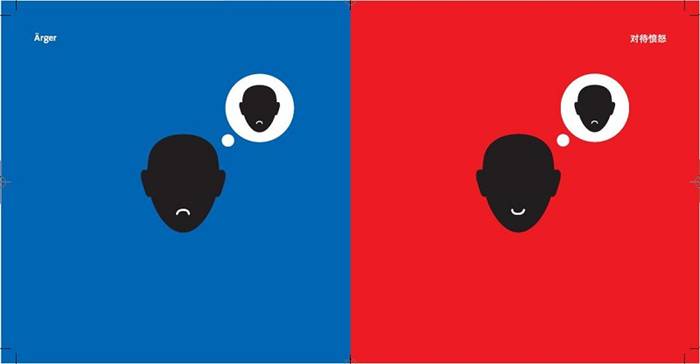
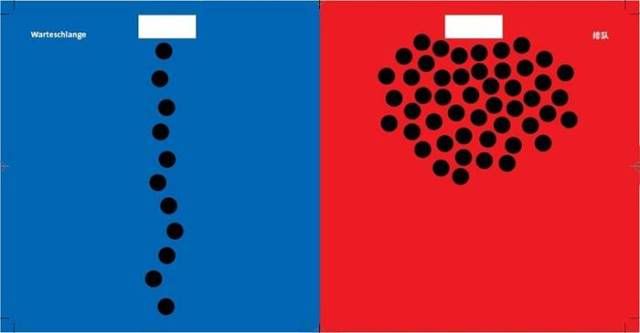
The following are some illustrations done by Chinese artist Liu Young, who had lived in Germany, showing some differences between high-context cultures vs. low-context cultures transnationally. 

The blue and red, respectively, portray the West in comparison to the East.   


Opinion:


Way of Life: 


Punctuality:


Contacts:


Anger:


Party:


Queue:


I wonder how those who haven't necessarily encountered both context cultures would interpret these illustrations above. I wonder if they can feel the absurdity. 


As a first generation immigrant, I've grown up among the two; and for me these images reflect a sort of richness due to the mélange, but also a kind of strife due to the inherent duplicity.


On the topic of communication with others that are different from you


Born in the states, I always respond to the occasional "Where are you from?" inquiry with the unsatisfactory "Texas" (my birthplace) even though it's obvious that what people want to hear (after they ask a second time) is "Well, my parents are originally from Bangladesh". And , yes, even though I am, too, Bengali, I make the distinction that it's my parents who are from elsewhere; I make the distinction that my culture is very much American.


But this is, in a sense, untrue, for cultures are not distinct between countries and large groups of people, but distinct at the level of the individual. 


My reasoning for making such a distinction has most times been to knock down that figurative wall in communication, to negate any conception that whoever is speaking to me and I are in any way culturally different, so that I can be perceived as relatable and an equal... But this is what I realize now, that each person in fact has a different culture of their own, made up of their unique experiences, incomparable to another's.  


Understanding that diversity occurs at the individual level, that similarities and differences should not be assumed and that stereotypes and prejudices should not be applied, is most important for communication in itself because everyone is different from you.


Monday, October 7, 2013

Listening


I'd like to think that I'm an analytical listener... or a critical listener... or a task-oriented listener... I'd like to think that I have objective judgement or a keen ear or a perpetual interest to find a solution—any of those. However what I have is empathy and, let's admit it, attachment issues. 


I'm just kidding; I don't have attachment issues. However, I am a relational listener.

I wouldn't say that I prefer to listen to people's emotions and feelings (as is claimed relational listeners do, in the book)... but I do tend to. 

I feel as though one can choose between listening styles, although perhaps they primarily identify with one. This is probably why at first glance I thought "Oh, I'm probably an analytical listener, wait, or a critical listener, no wait, a task-ori" just because there will be times in life when you need to adopt to these other listening styles to effectively, well, listen in differing contexts. 

Primarily, I identify with the relational listening style because of my tendency to, simply put, put people first. If you come to me teary-eyed or filled with rage or are bouncing off the walls even if I'm not, I'll sit through your entire spiel and listen to it all. And I'm okay with it, even happy to do it.

Most other people must not be relational listeners though, for whenever I've fallen into those moments that I need to rant or unload the details of my day to someone, the response I receive, I dare say, cannot compete with my own after twenty minutes of me listening to someone tell me about how their best friend and them got into a huge fight because one told the other that they had "changed" (I am clearly not analytic in these situations because the whole time I can assure you I am thinking "are you serious why are you crying why girl why" BUT I am listening and I will feel emphatic regardless).

That being said, there's no specific time I can think of when I felt I wasn't being listened to, because there's a slur of them. But the emphatic part of me understands that not everyone can be so emotionally connected, so it's all good. Although it would be cool if people could be a tad more emphatic.

As for me, my listening is in no way perfect. I may be able to sympathize well but where does that take you past the "I'm so sorry" or "I feel you girl"? I think the idea of identifying your listening goal is interesting, and think that actively engaging in that could help improve my listening. In a way it's a stepping stone to identifying which listening approach would be best to take.